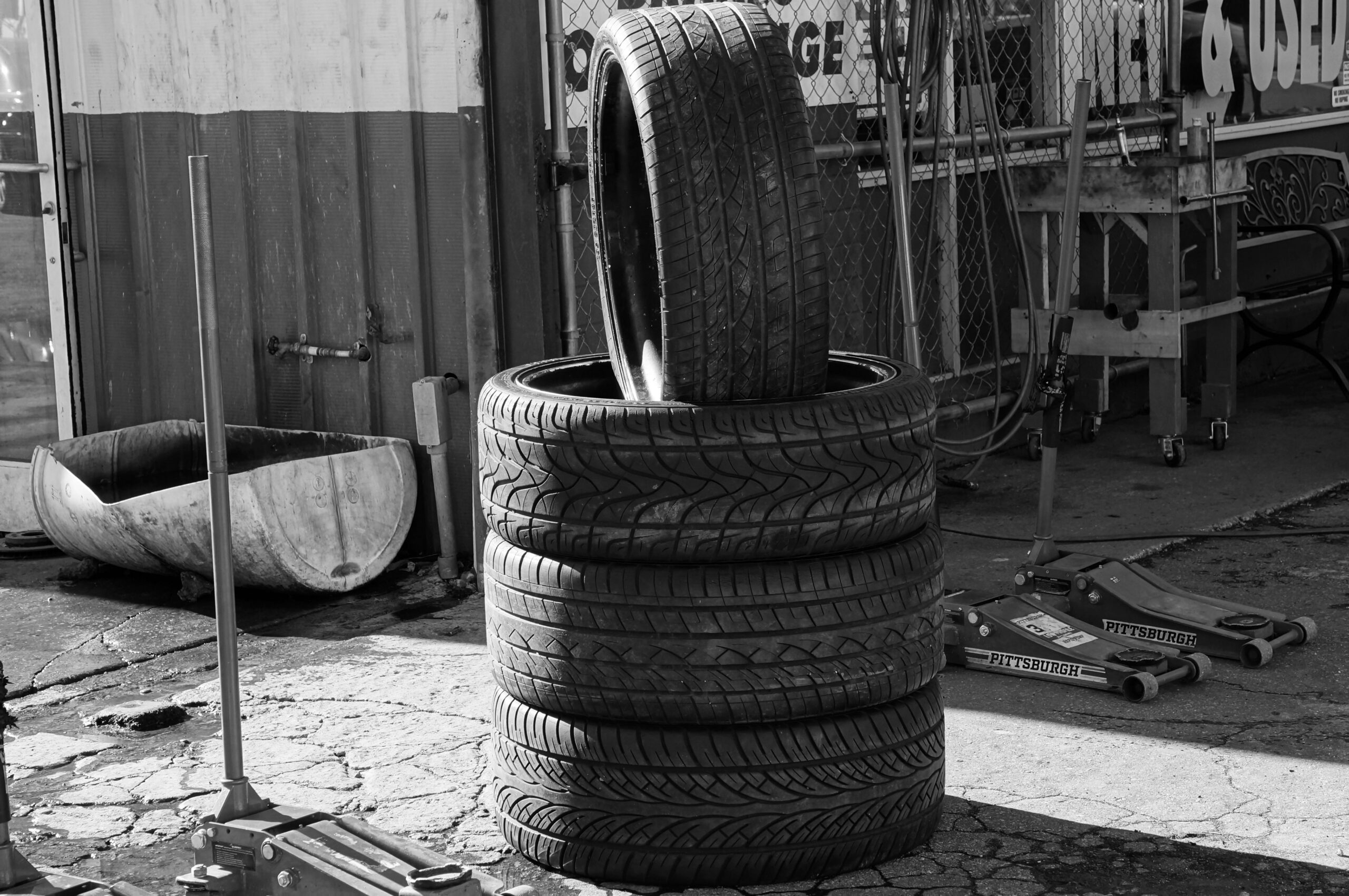
Before fitting winter tyres to your car, the question often arises whether last season’s set will last another winter or whether you should buy new tyres. At first glance, a decent-looking tread does not always answer this. When assessing tyre condition, you must also consider their age, any damage, the evenness of wear and, for studded tyres, the condition of the studs.
In Estonia, the minimum legal remaining tread depth for winter tyres is 3 mm. The Estonian Transport Administration recommends replacing winter tyres already at 4 mm remaining tread depth. These two figures mean different things: the first is the required minimum, the second is a recommendation for timely replacement.
If your tyres have around 4 mm of tread left in autumn, don’t assume they’ll last without issues until the following spring. Wear during the season depends, among other things, on mileage, driving style and conditions of use. A tyre that meets the requirement at the beginning of the season may reach the minimum limit already in the middle of winter.
Therefore, it’s worth checking your tyres before your booked tyre change. This gives you time, if needed, to find a new set in the right size and to plan the purchase and fitting better.
Use a dedicated gauge to measure tread depth. Looking by eye helps spot major differences, but it’s hard to accurately judge remaining tread depth to the nearest millimetre.
Before measuring, remove stones and other debris from the tread grooves. Then place the gauge in a main groove, making sure it’s not resting on a tread wear indicator. Measure the tread depth in several main grooves and at different points around the tyre. Write down the results and repeat the check on all four tyres.
A single good measurement does not represent the whole tyre. If the results differ noticeably, or one shoulder is more worn than the rest of the tread, have a specialist assess the tyre’s condition. You shouldn’t judge serviceability based only on the deepest point of the tread.
Low mileage doesn’t mean a tyre’s service life is unlimited. Even on a rarely used car, you need to consider the tyres’ age, storage conditions and visible signs of ageing. Tread depth shows wear but alone does not provide a full picture of tyre condition.
You can’t set the same service life in years for all tyres. Follow the instructions of the specific tyre manufacturer and vehicle manufacturer. For example, Michelin recommends having tyres inspected by a specialist at least once a year after five years of use. This doesn’t mean every five-year-old tyre should automatically be replaced, nor that a younger tyre is always fine.
If you bought a used car and don’t know the tyres’ previous history, it’s worth paying particular attention to their condition. If possible, ask the previous owner how long the tyres were used and how they were stored.
A four-digit code on the tyre sidewall shows the week and year of manufacture. The first two digits indicate the week and the last two the year.
For example, 3521 means the tyre was made in week 35 of 2021. The manufacturing date doesn’t show when the tyre was first fitted to a car, but it helps assess the overall age. If you can’t find the mark or don’t know how to read it, ask a specialist for help during the tyre change.
Check both the tread and the sidewalls. Look for cracks, cuts, tears and bulges protruding outward. You may not clearly see the inner side of a tyre while it’s on the car, so inspecting a removed wheel gives a more thorough overview.
A bulge on the tyre sidewall is a serious warning sign. It may indicate damage to the internal structure, caused for example by hitting a pothole or a heavy impact with a kerb. You should not continue driving on such a tyre. Stop in a safe place and arrange a wheel change or call roadside assistance.
A deep cut or exposed reinforcement material also requires immediate action. For smaller surface marks and cracks, have a specialist assess the extent of the damage. Not all marks indicate a problem of the same severity, but the depth of damage may not be apparent from an external visual check alone.
When assessing studded tyres, inspect the whole set. Note whether the studs are retained evenly or if there are larger areas where they are missing. Also compare the tyres with each other, as a noticeably different condition of one tyre is a reason for a more thorough check.
Don’t judge the usability of a studded tyre solely by tread depth. If the condition of the studs raises doubts, have a workshop assess both their wear and how firmly they are seated. When booking a tyre change, you can already mention that you want the existing set inspected.
Non-studded winter tyres don’t have studs to check, but assessing tread, damage and age is just as important. If you also use non-studded winter tyres in summer, consider their actual condition before winter, not only the results of a check done in spring.
If one shoulder of a winter tyre is noticeably more worn than the rest of the tread, it’s worth identifying the cause before fitting new tyres. Uneven wear can be caused by incorrect tyre pressure, misaligned wheel geometry or worn suspension components.
Simply replacing the tyres won’t eliminate these problems, and the new set may start to wear prematurely. Therefore have the workshop assess both the condition of the tyres as well as
Wheel alignment and wheel balancing are different jobs. Alignment checks and adjusts the wheel geometry; balancing corrects uneven distribution of wheel mass. The right job depends on the cause of the problem, not just on the fact that the tyres are worn.
You can’t answer this question based only on tyre age or a single tread measurement. Before deciding, it’s worth thoroughly assessing the condition of the entire set.
First, make sure the tread depth of all four tyres has been measured in several places. If the remaining depth approaches 4 millimetres, it’s worth considering replacement. Also look for cracks, cuts, bulges or other damage and whether the wear is even both across each tyre and across the whole set.
In addition to tread depth and visible damage, consider the manufacturing date and previous usage history. For studded tyres, pay special attention to the condition of the studs. If their wear or how firmly they are seated raises doubts, have a specialist check the tyres.
If anything you notice raises doubts, arrange an inspection before fitting the tyres. Take the whole set to the workshop, because you can’t assess the condition of the other three tyres based on just one.
Also tell the service adviser if you noticed steering wheel vibration, the car pulling to one side, or more frequent drops in tyre pressure last season. These observations help guide the inspection, but don’t in themselves prove that buying new tyres is the solution.
Assessing tyre condition before the season starts helps avoid discovering on changeover day that the old set is no longer suitable. If the tyres need replacing, it’s worth providing the car details and existing tyre size when asking for a quote, and describing your typical driving conditions.
When choosing a new set, what matters is compatibility with your car and everyday routes. You can read more about the differences between studded and non-studded winter tyres in the article Kuidas valida õiged naastrehvid või lamellrehvid?.
Unsure whether your winter tyres are still suitable for use? Contact your nearest CarStopi workshop and arrange a tyre condition check. If needed, ask for a quote for new winter tyres and book a tyre change.

Carstop newsletter
Service reminders, useful advice and campaign offers straight to your inbox.