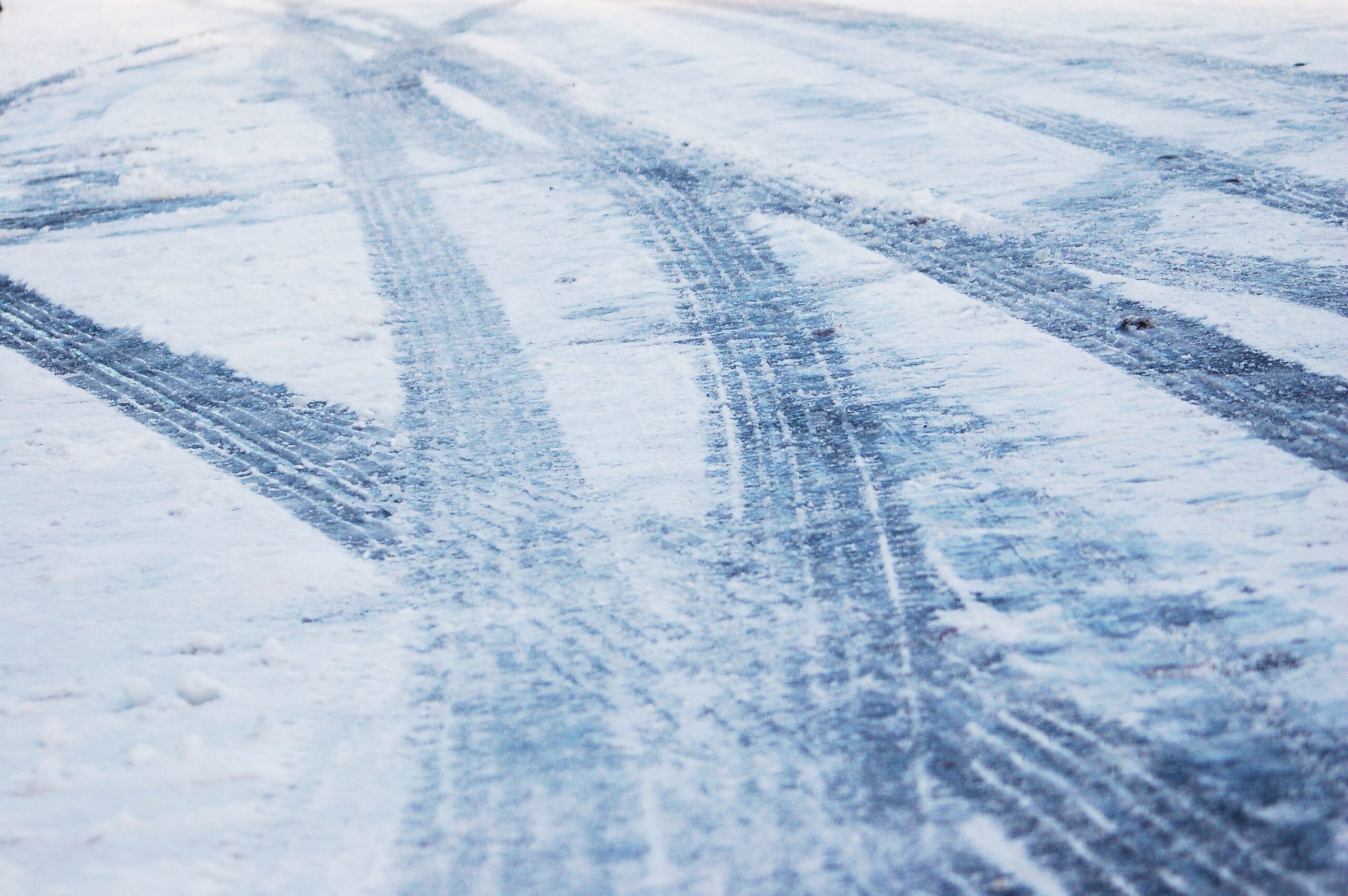
One day we drive on wet asphalt, the next morning the roads are covered with snow or ice. Both tyre types have their advantages and disadvantages. Studded tyres generally offer better grip on icy roads, while studless winter tyres are well suited for city driving and maintained main roads. The right choice depends above all on where and in what conditions you drive the most.
Studded tyres are best for drivers who often have to drive in winter on icy roads or in tougher conditions. They are especially useful in rural areas and on smaller side roads where snow clearing and de-icing are carried out less frequently than on major roads.
The advantage of studded tyres shows most clearly on glare ice and compacted snow with an icy surface. The metal studs bite into the ice and help maintain traction when braking, accelerating and cornering. This can be crucial, for example, when approaching junctions or pulling away on an icy climb.
Studded tyres may also be a better choice for drivers who start out early in the morning or late in the evening. At these times, black ice can form on the road surface and is hard to spot. Bridges, forested stretches and shaded bends are particularly dangerous, as the surface may freeze faster than elsewhere.
The downsides of studded tyres are higher road noise and road surface wear. On dry asphalt they can be noisier than studless winter tyres, and the studs also wear the road surface. In addition, you must consider the seasonal restrictions on the use of studded tyres.
Studless winter tyres are a good choice for drivers who mainly drive in the city and on regularly maintained main roads. They are particularly well suited to conditions where, in winter, the road surface is mostly wet, snowy or ploughed, and icy sections are less common.
The biggest advantage of studless winter tyres is a quieter and more comfortable ride. As these tyres have no metal studs, they generally produce less noise on asphalt. In addition, studless tyres cause less road wear, making them a more environmentally friendly choice in terms of road surface abrasion.
Studless winter tyres also offer more flexibility when planning tyre changes. Unlike studded tyres, they are not subject to a fixed seasonal usage restriction in Estonia. This allows you to fit them earlier in autumn and switch to summer tyres later in spring. However, their use in summer is not recommended, as they can wear faster on warm asphalt and their braking performance can be poorer than that of summer tyres.
Studless winter tyres are also worth considering if you often drive abroad. In several European countries, the use of studded tyres is prohibited or restricted, while compliant studless winter tyres are more widely permitted.
For the Estonian winter, it is important to choose studless winter tyres designed for Nordic conditions. These are made from a rubber compound that stays elastic in the cold, and their dense sipes help ensure grip on snow and ice. Central European winter tyres, by contrast, are more oriented towards milder winters and wet roads.
A winter tyre sidewall must have the 3PMSF marking, i.e. the three-peak mountain snowflake symbol, which shows that the tyre meets specific snow grip requirements. In Estonia the M+S marking alone is not sufficient for a winter tyre. At the same time, the 3PMSF marking does not automatically mean the tyre is well suited to Nordic glare ice, so it is worth paying attention to the characteristics of the tyre model.
The service life of studded and studless winter tyres depends primarily on tyre quality, mileage, driving style and maintenance. Therefore, it cannot be stated unequivocally that one tyre type always lasts longer than the other. However, studded and studless tyres wear differently.
With studded tyres, in addition to the tread pattern you must monitor the condition of the metal studs. Frequent driving on dry asphalt, hard braking and rapid acceleration can cause studs to wear or come out. If a large proportion of studs are missing, the tyre’s grip on ice decreases even if the tread depth is still sufficient.
For studless winter tyres, tread wear and rubber ageing play a bigger role. The grip of studless tyres depends on their fine sipes and the elasticity of the rubber. The more a tyre wears, the less effectively the pattern can work on snow and slush. Over time, the rubber compound can also become stiffer, reducing the tyre’s grip in cold weather.
For both tyre types, the minimum permitted remaining tread depth in Estonia is 3 mm, but for safety it is recommended to replace winter tyres already at 4 mm.
To extend tyre life, regularly check tyre pressures, avoid harsh acceleration and braking, and store tyres out of season in a cool, dry place protected from sunlight.
Correctly chosen and well-maintained winter tyres are the basis of safe driving. If you are unsure whether studded or studless winter tyres are better for your car, Carstop specialists will help find a solution that suits your driving habits and needs.
At Carstop service centres you can book a tyre change or buy new tyres. In addition, specialists help assess the condition of your existing tyres so you can head into winter with greater confidence.

Carstop newsletter
Service reminders, useful advice and campaign offers straight to your inbox.