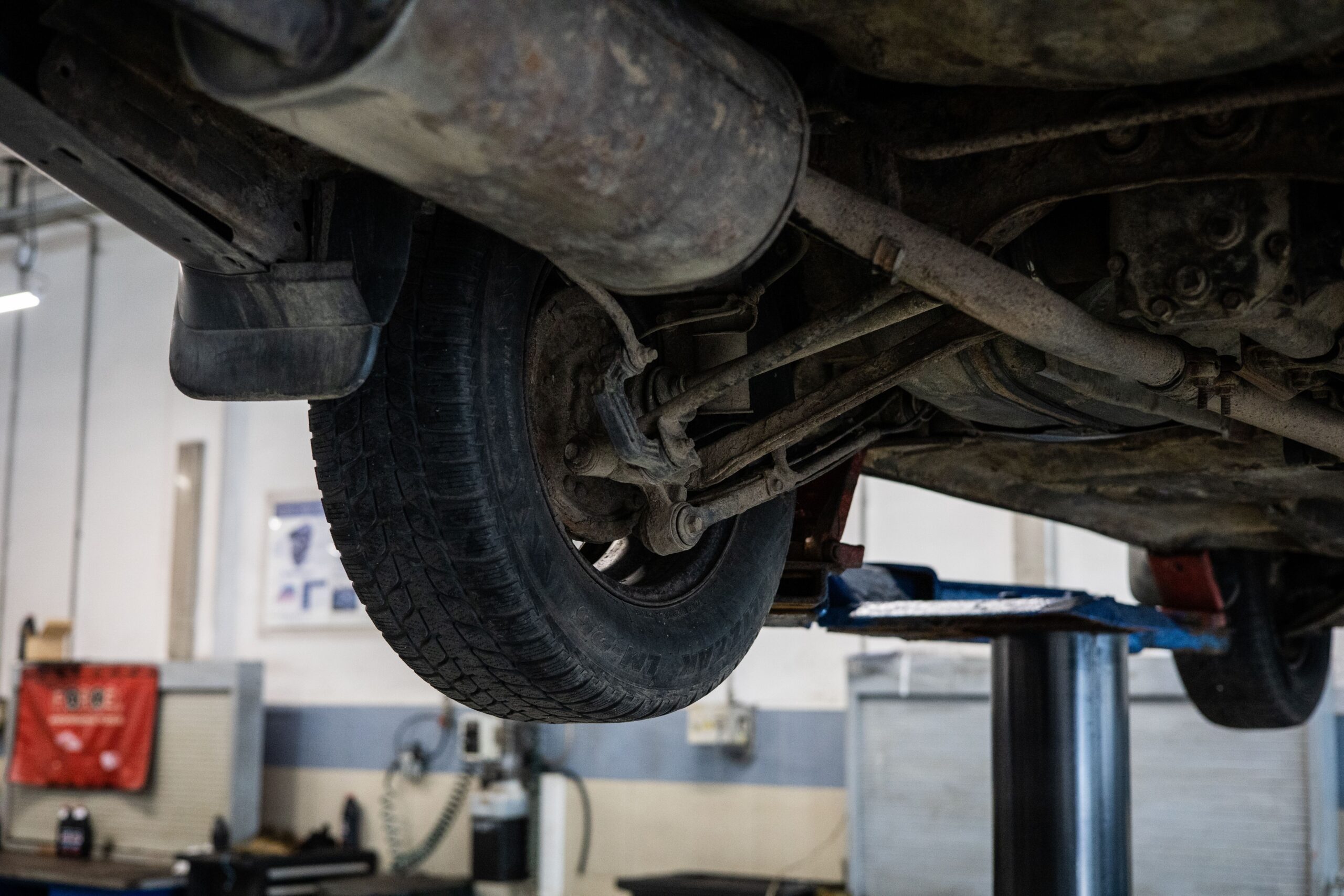
Does the car pull to one side while driving, is the steering wheel crooked when going straight, or do the tyres wear faster than usual? These may be signs that the wheel alignment is out of specification. In such a case, it’s worth checking whether the car needs a wheel alignment. Incorrect alignment can affect the car’s handling, directional stability and the service life of the tyres.
One possible sign of incorrect wheel alignment is when the car constantly drifts to one side while driving on a level road. The driver has to correct the steering to keep the direction, even though the road conditions don’t require it.
The cause may be incorrect wheel alignment angles, due to which the wheels are not running exactly in the intended direction. However, pulling to one side does not always mean that alignment adjustment is required. Similar symptoms can be caused by different tyre pressures, uneven tyre wear or brake issues. The road camber can also influence the direction of travel.
If the car drifts to the same side on different level road sections and the tyre pressures are correct, it’s worth having the wheel geometry and the condition of the suspension checked.
Normally, when driving straight on a level road, the steering wheel should be in the centre position. If the toe or steering system settings are out, the steering wheel position may no longer align with the wheels’ direction of travel. The issue can occur after suspension repairs, replacement of steering components or a heavy impact against a kerb. Sometimes the driver only notices a crooked steering wheel after a tyre change, even though the real cause may have arisen earlier. At the alignment, the wheel angles are checked and, if necessary, adjusted according to the values specified by the vehicle manufacturer.
Uneven tyre wear is one of the clearest signs that the wheel geometry needs checking. If the inner or outer edge of a tyre wears significantly faster than the rest of the tread, the cause may be incorrect toe or camber.
An incorrect wheel position can create a situation where the tyre does not roll on the road surface in the intended direction. As a result, additional friction occurs and the tyre tread wears faster. To detect the problem, it’s worth inspecting the tyres regularly across their full width. Checking only the outer edge may not be sufficient, as wear can be more pronounced on the inside.
At the same time, uneven tyre wear can also be caused by incorrect tyre pressure, worn shock absorbers or other suspension issues. Therefore, the real cause of wear must be identified before carrying out alignment. If the tyres are already heavily or unevenly worn, alignment will not restore their original condition. However, correct wheel settings will help prevent the same problem recurring with new tyres.
Incorrect wheel alignment can affect the car’s directional stability and steering feel. The driver may notice that the car no longer holds a straight line as confidently as before or that the steering requires constant correction. This change can be particularly noticeable on the motorway, where speeds are higher. The car may feel less precise than usual and keeping to the chosen direction requires more attention.
Unstable handling may not be caused only by wheel geometry. It can also be affected by worn track rod ends, ball joints, bushes, shock absorbers and the condition of the tyres. If the car’s handling has changed noticeably, the entire suspension should be checked. An alignment can measure the wheel positions, but worn or damaged suspension components must, if necessary, be repaired before adjustment.
Wheel alignment angles can also change as a result of a heavy impact. For example, driving through a deep pothole or hitting a kerb can damage a rim, a tyre or suspension components. Sometimes the damage is not visible from the outside. The car may continue to drive as usual, but the wheel positions may no longer meet the manufacturer’s requirements.
After a heavy impact, pay attention to whether the steering wheel is still straight, the car holds its lane and there is no visible tyre damage. If, after the impact, steering wheel vibration appears, the car starts pulling to one side or the handling changes, the vehicle should be inspected. In the case of strong vibration or visible tyre damage, it is not safe to continue normal driving before the issue has been assessed.
Not all issues related to a car’s handling mean that alignment adjustment is required. Similar symptoms can have different technical causes, and distinguishing between them helps avoid unnecessary work. For example, steering wheel vibration at a certain speed may indicate unbalanced wheels, a deformed rim or tyre damage. Wheel alignment does not replace wheel balancing, as the purposes of these jobs are different. If the car pulls to one side mainly under braking, the braking system should also be checked. If there is knocking from the suspension on uneven roads or free play is felt in the steering, the cause may be a worn suspension component.
The tyre wear pattern also provides useful information. Accelerated wear on one edge of the tyre may indicate incorrect toe or camber. Wear in the centre or on both edges of the tyre, on the other hand, may be related to incorrect tyre pressure. Therefore, it is important to assess the condition of the tyres, the suspension and the wheel alignment angles. If there are deficiencies in the car’s technical condition, alignment alone may not solve the problem.
Driving with incorrect wheel alignment angles can cause faster tyre wear and worsen the car’s handling. If the tyres wear unevenly, their service life may be significantly shortened and, as a result, they will need to be replaced sooner than would be necessary with normal wear. Incorrect wheel geometry can also affect the car’s rolling resistance and, in certain cases, increase fuel consumption. The extent of the effect depends on the misalignment and the driving conditions.
Most important, however, is the car’s handling. If keeping the chosen direction becomes imprecise or the car doesn’t respond to steering as expected, this can reduce driving safety.
If the car pulls to one side while driving, the steering wheel is crooked, the tyres wear unevenly or the handling has changed, it’s worth having the wheel geometry and the condition of the suspension checked. Timely inspection helps identify the cause of the problem, reduce premature tyre wear and restore the car’s intended handling.
Explore Carstop’s wheel alignment service and find a suitable Carstop workshop for you.
Carstop newsletter
Service reminders, useful advice and campaign offers straight to your inbox.